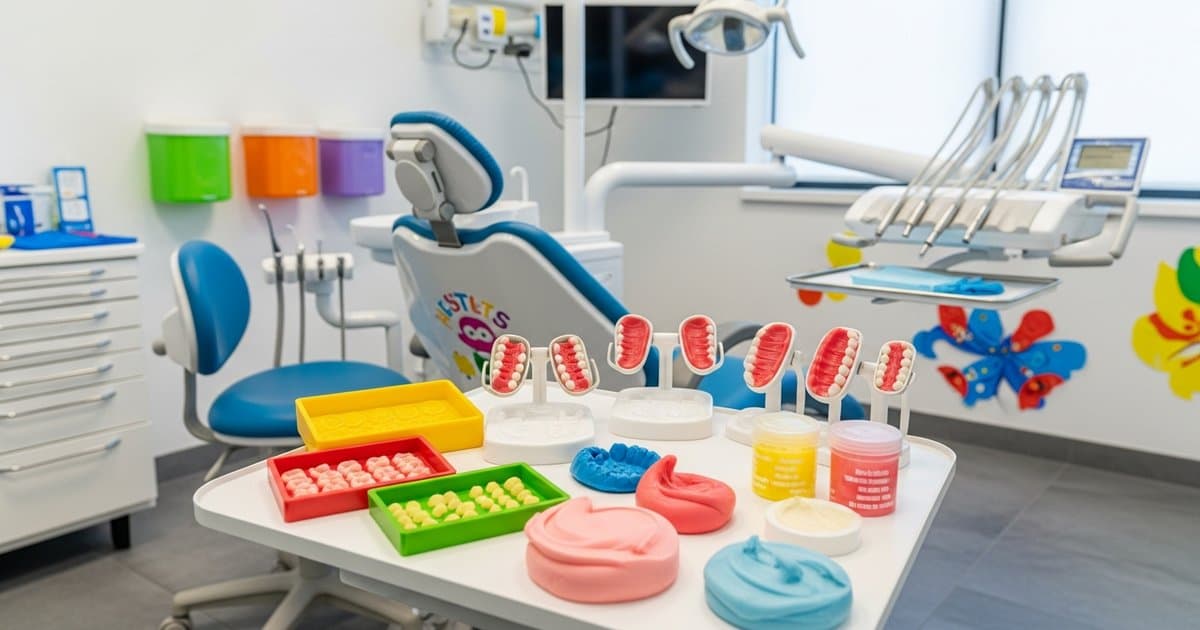
When it comes to taking impressions in pediatric dentistry, the choice between traditional alginate materials and modern digital scanning technology can significantly impact both your practice efficiency and patient experience. Children present unique challenges during impression procedures, from shorter attention spans to heightened gag reflexes, making the selection of appropriate impression methods crucial for successful outcomes. This comprehensive guide examines the pros and cons of alginate versus digital scanning for pediatric patients, helping you make informed decisions that benefit both your practice and your young patients.
Understanding Alginate Impressions in Pediatric Dentistry
Alginate has been the gold standard for dental impressions for decades, and it remains widely used in pediatric practices due to its affordability and versatility. This irreversible hydrocolloid material offers several advantages when working with children, but also presents specific challenges that pediatric dentists must navigate carefully.
Advantages of Alginate for Pediatric Patients
The primary benefit of alginate impressions lies in their familiarity and proven track record. Most dental professionals are highly experienced with alginate manipulation, mixing ratios, and troubleshooting common issues. For pediatric patients, alginate's relatively short setting time (typically 2-3 minutes) can be advantageous, as it minimizes the duration children must keep the tray in their mouth.
Alginate also provides excellent detail reproduction for most pediatric applications, including study models, space maintainer fabrication, and orthodontic appliances. The material's flexibility makes removal easier for anxious children, reducing discomfort during the impression process. Additionally, alginate impressions work well for capturing mixed dentition, which is common in pediatric patients transitioning from primary to permanent teeth.
Challenges with Alginate in Pediatric Settings
Despite its advantages, alginate presents several challenges specific to pediatric dentistry. The material's taste and texture can be particularly problematic for children, often triggering gag reflexes or causing distress. The need for proper tray loading and quick, accurate placement requires cooperation that younger patients may struggle to provide.
Alginate's dimensional stability limitations mean impressions must be poured promptly, typically within one hour, creating workflow pressures in busy pediatric practices. Storage requirements and the need for retakes due to patient movement or inadequate cooperation can increase material costs and chair time significantly.
When selecting alginate products for pediatric use, consider flavored options like Cavex ImpreSafe or Kerr Jeltrate Plus, which offer improved patient acceptance. Fast-set formulations can reduce chair time, though they require more precise timing and technique from the clinical team.
Digital Scanning Technology for Children
Digital impression systems have revolutionized dentistry, and their benefits are particularly pronounced in pediatric settings. These systems use optical scanning technology to capture detailed 3D images of the oral cavity without the need for traditional impression materials.
Benefits of Digital Scanning for Pediatric Patients
The most significant advantage of digital scanning for children is the elimination of impression materials entirely. This removes the primary source of patient discomfort and anxiety associated with traditional impressions. Children no longer need to endure the taste, texture, or sensation of having their mouth filled with alginate.
Digital scanners offer superior patient cooperation because the process feels more like a "camera taking pictures" rather than a medical procedure. The scanning wand is small and maneuverable, allowing for easier access in smaller pediatric mouths. Real-time visualization on monitors can actually engage children in the process, turning what was once an uncomfortable procedure into an interactive experience.
From a clinical perspective, digital impressions provide exceptional accuracy and detail reproduction. The ability to immediately review scans and identify areas requiring additional capture eliminates the need for complete retakes. This is particularly valuable in pediatric dentistry, where patient cooperation windows may be limited.
Considerations for Digital Scanning Implementation
While digital scanning offers numerous advantages, implementation requires careful consideration of several factors. The initial investment in digital scanning technology is substantial, with quality systems ranging from $15,000 to $50,000 or more. However, the long-term savings on impression materials and reduced chair time often justify this investment.
Staff training is crucial for successful digital scanning implementation. Team members must become proficient not only in operating the equipment but also in managing the digital workflow, including file management and communication with laboratories.
Popular pediatric-friendly digital scanning systems include the 3Shape TRIOS, iTero Element, and Dentsply Sirona CEREC Primescan. These systems offer features specifically beneficial for pediatric use, such as fast scanning speeds, small wand tips, and engaging patient interfaces.
Comparing Accuracy and Clinical Outcomes
When evaluating impression methods for pediatric dentistry, accuracy and clinical outcomes are paramount considerations. Both alginate and digital scanning can produce clinically acceptable results, but their performance characteristics differ significantly in pediatric applications.
Accuracy Comparison
Digital impressions consistently demonstrate superior accuracy compared to alginate, particularly for complex cases involving multiple teeth or full-arch captures. Studies show digital impressions typically achieve accuracy within 50 microns, while alginate impressions may vary by 100-200 microns depending on technique and timing.
For pediatric applications, this accuracy difference becomes crucial when fabricating precision appliances like space maintainers, where proper fit is essential for treatment success. Digital impressions eliminate variables such as mixing ratios, air bubbles, and dimensional changes that can affect alginate accuracy.
However, it's important to note that for many routine pediatric procedures, such as study models or simple appliance fabrication, the accuracy difference may not be clinically significant. The key is matching the impression method to the specific clinical requirements.
Patient Comfort and Cooperation
Patient comfort represents perhaps the most significant factor when choosing between impression methods for children. Digital scanning eliminates the physical discomfort associated with impression materials, but it requires patient cooperation for adequate scanning coverage.
Younger children (ages 3-7) may struggle to maintain the mouth positioning required for comprehensive digital scans, while they might better tolerate a quick alginate impression. Conversely, older children and teenagers often strongly prefer digital scanning due to the elimination of material taste and texture concerns.
The ability to pause and restart digital scans provides flexibility that's particularly valuable with anxious or uncooperative pediatric patients. This contrasts with alginate impressions, which must be completed within the material's working time regardless of patient cooperation.
Cost Analysis and Practice Efficiency
Understanding the true cost implications of impression methods requires analyzing both direct material costs and indirect factors such as chair time, retakes, and staff efficiency. This analysis becomes particularly complex in pediatric practices due to higher rates of patient non-cooperation and the need for additional comfort measures.
Direct Cost Comparison
Alginate impressions appear more cost-effective from a pure materials perspective, with individual impression costs typically ranging from $3-8 depending on the product used and tray size. This includes the alginate powder, water, trays, and disinfection materials.
Digital scanning eliminates per-impression material costs but requires amortizing the equipment investment across the expected number of impressions. For a typical pediatric practice taking 500-1000 impressions annually, the per-impression equipment cost may range from $15-30 when calculated over a 5-7 year equipment lifespan.
However, this direct cost comparison doesn't account for the hidden costs associated with alginate impressions, including storage requirements, retakes due to dimensional changes or patient cooperation issues, and the staff time required for mixing, loading, and managing materials.
Efficiency and Workflow Considerations
Digital scanning can significantly improve practice efficiency by eliminating impression storage requirements and reducing the need for retakes. The immediate availability of digital files streamlines communication with laboratories and enables faster case completion.
For pediatric practices, the reduced chair time associated with successful digital scans can translate to improved patient scheduling flexibility and reduced anxiety for both patients and parents. The ability to immediately show parents the digital impressions can also enhance case acceptance and treatment understanding.
However, practices must consider the learning curve associated with digital scanning implementation and the potential for initial productivity decreases as staff members become proficient with new technology.
Making the Right Choice for Your Practice
Selecting the optimal impression method for your pediatric practice requires careful consideration of multiple factors, including patient demographics, case types, practice volume, and long-term goals. Many successful pediatric practices find that a hybrid approach, utilizing both alginate and digital scanning for different situations, provides the greatest flexibility and optimal outcomes.
Patient Age and Cooperation Considerations
Very young children (ages 3-6) may be better candidates for flavored alginate impressions due to their limited ability to cooperate with digital scanning requirements. The quick setting time of alginate can be advantageous when working with patients who have short attention spans or difficulty following instructions.
Older children and teenagers typically respond well to digital scanning, often viewing the technology as interesting rather than intimidating. The elimination of material taste and texture can be particularly beneficial for patients with strong gag reflexes or previous negative experiences with traditional impressions.
Consider your practice's patient demographics when making technology decisions. Practices serving primarily younger children may find less immediate benefit from digital scanning, while those treating more school-age and teenage patients often see significant advantages.
Case Type Considerations
Certain clinical situations may favor one impression method over another. Simple study models or preliminary impressions for space maintainers may be adequately captured with alginate, while complex orthodontic cases or precision appliance fabrication may benefit from digital scanning accuracy.
When planning space maintainers and other precision appliances, the superior accuracy of digital impressions can result in better-fitting appliances and fewer adjustment appointments. This is particularly important in pediatric dentistry, where multiple appointments can increase patient anxiety and impact cooperation.
For practices offering comprehensive pediatric services, having both impression methods available provides flexibility to choose the most appropriate technique for each specific situation and patient.
How TGP Can Help
The Group Practice (TGP) understands the unique supply needs of pediatric dental practices and the importance of cost-effective procurement for both traditional and digital impression systems. As a specialized group purchasing organization, TGP leverages collective buying power to help pediatric practices save 20-30% on essential supplies including alginate materials, impression trays, digital scanning equipment, and related accessories.
TGP's pediatric-focused approach means understanding which alginate brands work best for children, which flavors improve patient acceptance, and how to optimize supply ordering for maximum cost savings. Whether your practice uses traditional impression materials exclusively or combines alginate with digital scanning technology, TGP can help reduce your supply costs significantly.
Beyond cost savings, TGP provides valuable guidance on product selection, helping practices choose the most appropriate impression materials and equipment for their specific patient demographics and clinical needs. This expertise is particularly valuable when considering major technology investments like digital scanning systems, where TGP's negotiated pricing can result in substantial savings on initial equipment costs and ongoing service agreements.
The savings achieved through TGP membership often exceed $15,000-25,000 annually for typical pediatric practices, with impression-related supplies representing a significant portion of these savings. These cost reductions can help practices invest in advanced technologies like digital scanning while maintaining healthy profit margins on routine procedures requiring traditional impression materials.
Key Takeaways
• Digital scanning eliminates patient discomfort from impression materials but requires higher initial investment and staff training
• Alginate remains cost-effective for routine procedures but presents challenges with pediatric patient cooperation and comfort
• Accuracy advantages of digital scanning are most beneficial for precision appliances and complex cases
• Patient age and cooperation level should guide impression method selection, with younger children often tolerating alginate better
• A hybrid approach using both methods provides maximum flexibility for different clinical situations
• Cost analysis must include hidden expenses like retakes, storage, and chair time, not just material costs
• Practice efficiency improvements from digital scanning can offset higher initial equipment investments over time
• Essential supply management and cost control are crucial regardless of impression method chosen
FAQ
Which impression method works best for anxious pediatric patients?
Digital scanning typically works better for anxious children because it eliminates the taste, texture, and sensation of impression materials that often trigger anxiety. The scanning process can be presented as taking pictures with a special camera, which many children find interesting rather than frightening. However, very young children (under 6) who have difficulty sitting still may actually do better with quick-setting flavored alginate impressions that minimize chair time. The key is assessing each child's specific anxiety triggers and cooperation level to choose the most appropriate method.
How do I justify the cost of digital scanning equipment for my pediatric practice?
Justifying digital scanning investment requires analyzing both direct and indirect cost factors. While equipment costs are substantial ($15,000-50,000+), consider the savings from eliminated impression materials, reduced retakes, improved efficiency, and enhanced patient experience leading to better retention and referrals. For practices taking 500+ impressions annually, the per-impression cost over 5-7 years often becomes competitive with alginate when accounting for all factors. Additionally, digital scanning can enable new services and improve case acceptance through better patient education and communication.
Can digital scanners capture mixed dentition effectively in pediatric patients?
Yes, modern digital scanners excel at capturing mixed dentition, often providing superior detail compared to alginate impressions. The scanning technology can clearly differentiate between primary and permanent teeth, capture erupting teeth accurately, and provide detailed visualization of tissue contours. This makes digital scanning particularly valuable for orthodontic treatment planning and space maintainer fabrication in pediatric patients. The ability to immediately review scans and capture additional detail as needed ensures comprehensive documentation of complex mixed dentition cases.