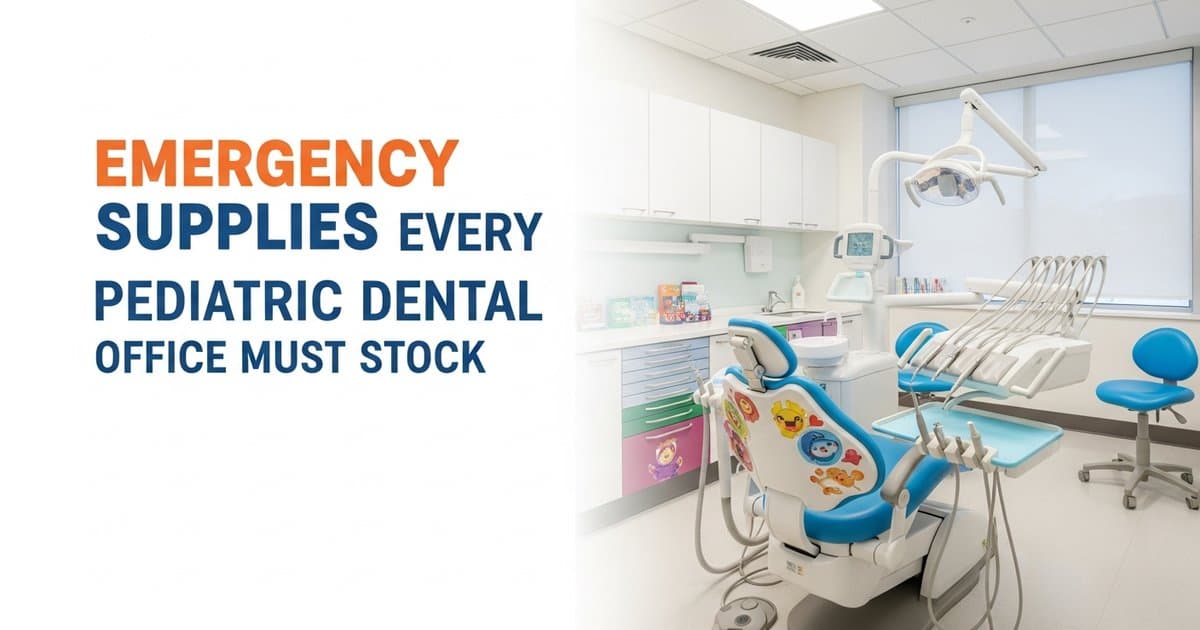
When a medical emergency strikes in your pediatric dental practice, having the right supplies immediately available can mean the difference between a successfully managed situation and a potentially life-threatening crisis. Unlike adult dental practices, pediatric offices face unique challenges that require specialized emergency preparedness, from age-appropriate equipment sizes to medications calculated for smaller body weights. This comprehensive guide will walk you through the essential emergency supplies every pediatric dental office must maintain, helping you create a robust safety net that protects your young patients while ensuring regulatory compliance and peace of mind for both your team and parents.
Core Medical Emergency Equipment for Pediatric Practices
The foundation of any pediatric dental emergency kit begins with properly sized medical equipment designed specifically for children. Standard adult-sized emergency equipment simply won't suffice when treating patients ranging from toddlers to teenagers, making pediatric-specific sizing critical for effective emergency response.
Airway Management EquipmentYour practice must maintain a complete range of pediatric airway management tools. Stock bag-valve-mask (BVM) systems in pediatric sizes, including infant, child, and adult sizes to accommodate your full patient range. The Laerdal Silicone Resuscitator stands out as a reliable choice, offering superior seal and durability. Include oral and nasal airways in sizes 000, 00, 0, 1, 2, 3, and 4 to ensure proper fit across all age groups.
Face masks should be available in multiple sizes with both cushioned and non-cushioned options. Many practitioners prefer clear masks that allow visual confirmation of breathing and any oral secretions. The Intersurgical EcoLite series provides excellent visibility while maintaining a secure seal.
Oxygen Delivery SystemsA portable oxygen delivery system is non-negotiable for pediatric dental emergencies. Consider a system that provides both positive pressure ventilation capability and standard oxygen flow. The portable E-cylinder oxygen tank with regulator should be your minimum standard, though many practices benefit from a larger M-cylinder for extended treatment capabilities.
Include nasal cannulas in pediatric sizes (infant, pediatric, and adult) and simple face masks sized appropriately for children. Flow meters should be capable of delivering 0.5 to 15 liters per minute to accommodate the varying needs of different-sized patients. Remember that pediatric oxygen flow rates are calculated differently than adult rates, typically ranging from 1-6 L/min for most emergency situations.
Monitoring EquipmentReliable monitoring equipment sized for pediatric patients is essential. A high-quality pulse oximeter with pediatric sensors can provide crucial vital sign information during emergencies. The Masimo Rad-5v offers excellent accuracy even with movement and poor perfusion, common challenges in pediatric emergencies.
Blood pressure cuffs must be available in multiple pediatric sizes – infant, child, and adult. Improper cuff sizing can lead to dangerously inaccurate readings during critical moments. Include both manual and automatic options, as automated systems may struggle with very small patients or those in distress.
A reliable stethoscope with both adult and pediatric chest pieces ensures accurate assessment of heart and lung sounds. Many practitioners prefer the Littmann Classic III for its versatility across age groups.
Essential Emergency Medications and Dosing
Medication management in pediatric dental emergencies requires precise dosing calculations based on patient weight and age. Unlike adult practices where standard dosing often applies, pediatric medications demand careful attention to mg/kg calculations and age-appropriate formulations.
Primary Emergency MedicationsEpinephrine stands as your most critical emergency medication, essential for treating severe allergic reactions and anaphylaxis. Stock epinephrine in multiple concentrations: 1:1000 (1 mg/mL) for intramuscular injection and 1:10,000 (0.1 mg/mL) for intravenous use if your practice provides IV sedation. Auto-injectors like EpiPen Jr. (0.15 mg) and regular EpiPen (0.3 mg) provide quick administration for children weighing 15-30 kg and over 30 kg respectively.
Albuterol inhalers with spacers designed for children are crucial for bronchospasm management. The pediatric spacer masks ensure effective medication delivery even in distressed or unconscious patients. Stock both the standard albuterol inhaler (ProAir or Ventolin) and nebulizer solutions for severe cases.
Diphenhydramine (Benadryl) should be available in both oral and injectable forms. Pediatric liquid formulation (12.5 mg/5 mL) allows for accurate dosing in younger patients, while 50 mg/mL injection provides rapid action in severe allergic reactions. Calculate dosing at 1-2 mg/kg for children, with maximum single doses of 50 mg.
Oxygen, while not technically a medication, serves as your most frequently used therapeutic intervention. Beyond standard oxygen delivery, consider nitrous oxide reversal protocols, as many pediatric practices utilize N2O for anxious patients.
Secondary Medications for Advanced ManagementGlucose gel or tablets address hypoglycemic emergencies, though pediatric dosing requires careful calculation. Glucose gel provides easier administration for younger children who cannot safely chew tablets. Stock 15-gram tubes and calculate 0.5-1 g/kg for treatment.
Aspirin (chewable 81 mg tablets) should be available for suspected cardiac events in older pediatric patients, though use in children requires careful consideration of Reye's syndrome risk. Many practitioners prefer to focus on rapid transport rather than aspirin administration in pediatric patients.
Activated charcoal may be beneficial for certain ingestion emergencies, though its use in dental settings is limited. Consult with your local emergency medical services regarding protocols for potential poisoning cases.
Medication Storage and RotationImplement a robust medication rotation system with monthly expiration date checks. Pediatric practices often use emergency medications less frequently than adult practices, making expiration management crucial. Color-coded labels or digital tracking systems can help staff quickly identify medications requiring replacement.
Store medications according to manufacturer specifications, with particular attention to temperature-sensitive items like epinephrine. Many practitioners use medication refrigerators with temperature monitoring to ensure efficacy during critical moments.
Age-Specific Emergency Protocols and Supplies
Pediatric dental emergencies require age-stratified approaches that account for the dramatic physiological differences between a three-year-old and a thirteen-year-old patient. Your emergency supplies and protocols must reflect these variations to ensure appropriate care across your entire patient population.
Infant and Toddler Considerations (Ages 0-3)The youngest patients present unique challenges requiring specialized equipment and modified techniques. Infant-sized BVM masks and airways are essential, as adult equipment can cause injury or ineffective ventilation. Stock size 0 and 00 oral airways, and remember that nasal airways are generally contraindicated in infants due to their large adenoids and small nasal passages.
For this age group, medication dosing becomes particularly critical. Epinephrine dosing at 0.01 mg/kg (0.1 mL/kg of 1:10,000 or 0.01 mL/kg of 1:1000) requires precise calculation and small-volume syringes for accurate administration. Consider pre-calculated dosing charts posted in your emergency area to eliminate calculation errors during stressful situations.
Temperature regulation deserves special attention in infants and toddlers. Stock emergency blankets and consider the ambient temperature of your emergency response area. Young children lose heat rapidly during medical emergencies, which can complicate recovery efforts.
School-Age Children (Ages 4-11)School-age patients typically cooperate better during emergencies but may have specific fears or anxieties that complicate treatment. Child-friendly language cards can help staff communicate effectively during stressful situations. Consider visual aids that explain procedures in age-appropriate terms.
This age group often requires intermediate-sized equipment. Size 1-3 oral airways, pediatric face masks, and child-sized blood pressure cuffs ensure proper fit and function. Many practices find success with colorful or decorated equipment that appears less intimidating to children.
Medication administration becomes more straightforward with school-age children who can often cooperate with oral medications and understand simple instructions. However, maintain injectable options for severe emergencies when oral administration isn't feasible.
Adolescent Patients (Ages 12+)Adolescent patients approach adult physiology but may still require modified approaches. This age group often experiences more anxiety about medical procedures and may have strong vasovagal responses to stress or pain. Ensure your emergency supplies include positioning aids for syncope management and consider the psychological aspects of emergency care.
Equipment sizing transitions toward adult dimensions for most adolescents, though smaller options should remain available for petite patients. Blood pressure cuffs, airways, and face masks in both pediatric and adult sizes ensure appropriate fit.
Medication dosing may approach adult levels for larger adolescents, but weight-based calculations remain important. Many teenagers haven't reached full adult weight, making standard adult dosing inappropriate and potentially dangerous.
This comprehensive approach to emergency supplies, as outlined in our Essential Supplies Every Pediatric Dental Office Needs guide, ensures you're prepared for any situation that might arise in your practice.
Advanced Life Support Equipment and Training
While basic life support forms the foundation of emergency preparedness, certain pediatric dental practices may require advanced life support capabilities, particularly those offering sedation services or treating medically complex patients. Understanding when and how to implement advanced interventions can significantly impact patient outcomes.
Defibrillation and Cardiac Emergency EquipmentAutomated External Defibrillators (AEDs) designed for pediatric use are essential for practices treating children. Modern AEDs like the Philips HeartStart include pediatric pads and settings that automatically adjust energy delivery for patients under 55 pounds. The pediatric pads reduce delivered energy from 200 joules to 50 joules, appropriate for small body mass.
Consider the LIFEPAK CR2 with pediatric capability, which provides clear voice prompts and visual instructions during high-stress situations. This model includes a child mode button that automatically adjusts protocols for patients under 8 years old or 55 pounds.
Stock additional pediatric electrode pads beyond the AED's included set. Emergency situations may require multiple attempts, and electrode pads cannot be reused. Ensure staff understands proper pad placement for pediatric patients, which differs significantly from adult positioning.
IV Access and Medication AdministrationPractices providing Sedation Supplies for Pediatric Dentistry must maintain advanced IV emergency capabilities. Pediatric IV access presents significant challenges, requiring specialized equipment and extensive training. Stock multiple IV catheter sizes (22-gauge, 24-gauge, and 26-gauge) appropriate for small vessels.
Intraosseous (IO) devices like the EZ-IO provide alternative access when peripheral IVs prove difficult in emergency situations. IO access is often faster and more reliable than IV access in pediatric emergencies, particularly in hypovolemic or cardiac arrest situations. Include pediatric needle sets (15mm for most children, 25mm for larger children) and ensure staff training on proper insertion techniques.
Consider butterfly needles for medication administration when IV access isn't required for fluid administration. The smaller gauge and shorter length often prove more appropriate for pediatric patients requiring single medication doses.
Suction and Airway ClearancePortable suction units with pediatric-specific capabilities are crucial for airway management during emergencies. The Laerdal Compact Suction Unit provides excellent portability with sufficient power for pediatric needs. Include multiple suction catheter sizes, from 6Fr for infants to 14Fr for larger children.
Yankauer suction tips work well for older children and adolescents, while flexible suction catheters prove more appropriate for infants and toddlers. Consider the SSCOR QuickDraw portable suction device as a backup system, particularly for practices in areas with unreliable electrical power.
Training and Certification RequirementsAdvanced equipment requires comprehensive staff training and regular recertification. Pediatric Advanced Life Support (PALS) certification should be considered for key staff members, particularly in practices providing sedation services. PALS training covers pediatric-specific emergency protocols, medication dosing, and equipment utilization.
Basic Life Support (BLS) certification should be maintained by all clinical staff, with pediatric-specific components emphasized during training. Many certification programs now include pediatric scenarios that better prepare dental staff for the unique challenges of treating children during emergencies.
Regular mock emergency drills using your actual equipment and supplies help identify training gaps and equipment issues before real emergencies occur. Document these drills for regulatory compliance and continuous improvement purposes.
How TGP Can Help
Managing the extensive inventory requirements for pediatric emergency supplies can significantly impact your practice's bottom line, but The Dental Group Purchasing Organization (TGP) offers a strategic solution that transforms this necessary expense into a competitive advantage. As a group purchasing organization specifically designed for dental practices, TGP leverages collective buying power to deliver substantial savings on the emergency supplies discussed throughout this guide.
TGP members typically save 20-30% on emergency medical supplies, including the specialized pediatric equipment that commands premium prices in the marketplace. From pediatric-sized BVM masks and airways to age-appropriate monitoring equipment, these savings add up quickly when outfitting a comprehensive emergency response system. The organization's negotiated contracts with major medical supply manufacturers ensure you're accessing the same high-quality products at significantly reduced costs.
Beyond simple cost savings, TGP provides invaluable expertise in emergency supply management. The organization's dental-specific focus means they understand the unique challenges pediatric practices face in maintaining current, compliant emergency inventories. TGP can help streamline your ordering processes, establish automated replenishment systems for critical supplies, and provide guidance on optimal inventory levels that balance cost efficiency with safety requirements.
The membership benefits extend to ongoing support and education around emergency preparedness. TGP members gain access to best practices from other pediatric dental practices, helping you learn from collective experience in emergency management. This peer network proves invaluable when evaluating new products, updating protocols, or addressing regulatory changes that impact emergency supply requirements.
TGP's relationship with suppliers also provides advantages in product availability and priority fulfillment. During supply chain disruptions that occasionally affect medical supplies, group purchasing members often receive priority allocation of critical items like medications and emergency equipment. This supply security ensures your practice maintains emergency readiness regardless of broader market conditions.
The organization's volume purchasing power extends to training materials and certification programs that support your emergency preparedness efforts. From PALS certification courses to equipment training resources, TGP members access professional development opportunities at reduced costs, making it easier to maintain the high level of staff competency that effective emergency response requires.
Key Takeaways
• Age-appropriate equipment sizing is critical – Stock emergency supplies in infant, pediatric, and adult sizes to ensure proper fit and function across your entire patient population
• Weight-based medication dosing requires precise calculation – Maintain current dosing charts and consider pre-calculated emergency medication doses for common weight ranges
• Airway management takes priority – Invest in high-quality BVM systems, oral/nasal airways, and portable oxygen delivery specifically sized for pediatric patients
• Regular inventory rotation prevents medication expiration – Implement monthly checks of all emergency medications with particular attention to temperature-sensitive items like epinephrine
• Staff training must be ongoing and pediatric-specific – Ensure BLS certification for all clinical staff with consideration of PALS certification for key team members
• Mock emergency drills identify gaps before real emergencies – Conduct regular practice scenarios using your actual equipment and supplies to maintain team readiness
• Group purchasing organizations provide significant cost savings – Leverage collective buying power through organizations like TGP to reduce supply costs by 20-30% while maintaining quality standards
• Documentation and regulatory compliance require attention – Maintain proper records of equipment checks, medication rotations, and staff training to meet regulatory requirements
• Advanced life support capabilities may be necessary – Practices providing sedation or treating medically complex patients should consider AED units and advanced airway management tools
• Emergency supply management impacts practice liability – Proper emergency preparedness reduces malpractice risk while ensuring optimal patient outcomes during critical situations
FAQ
What are the minimum emergency supplies required by law for pediatric dental practices?
Legal requirements vary by state and local jurisdiction, but most regulatory bodies require basic life support equipment including oxygen delivery systems, emergency medications (particularly epinephrine), airway management tools, and monitoring equipment. Contact your state dental board and local emergency medical services to understand specific requirements in your area. Many states reference American Heart Association guidelines for pediatric emergency care, which emphasize age-appropriate equipment sizing and weight-based medication protocols. Additionally, if your practice provides sedation services, enhanced emergency supply requirements typically apply, often including advanced airway management tools and additional monitoring capabilities.
How often should emergency medications be replaced, and what's the best system for tracking expiration dates?
Emergency medications should be checked monthly for expiration dates, with replacement occurring before expiration to ensure full potency during actual emergencies. Epinephrine is particularly sensitive to temperature and light exposure, potentially losing effectiveness even before the printed expiration date if improperly stored. Many practices implement color-coded labeling systems with quarterly rotation schedules, while others use digital inventory management systems that send automatic alerts approaching expiration dates. Consider maintaining a medication log that tracks purchase dates, expiration dates, and rotation schedules. Some practitioners prefer to replace medications 6 months before expiration to ensure maximum efficacy, particularly for critical items like epinephrine and albuterol.
Should pediatric dental practices invest in AED units, and what features are most important?
Yes, AED units are highly recommended for pediatric dental practices, particularly those providing sedation services or treating medically complex patients. Cardiac emergencies, while rare in pediatric dentistry, can occur due to allergic reactions, medication interactions, or underlying cardiac conditions. Choose AED units specifically designed for pediatric use, such as those offering pediatric electrode pads and automatic energy adjustment for patients under 55 pounds. Look for models with clear voice prompts, visual instructions, and child-specific protocols. The Philips HeartStart and