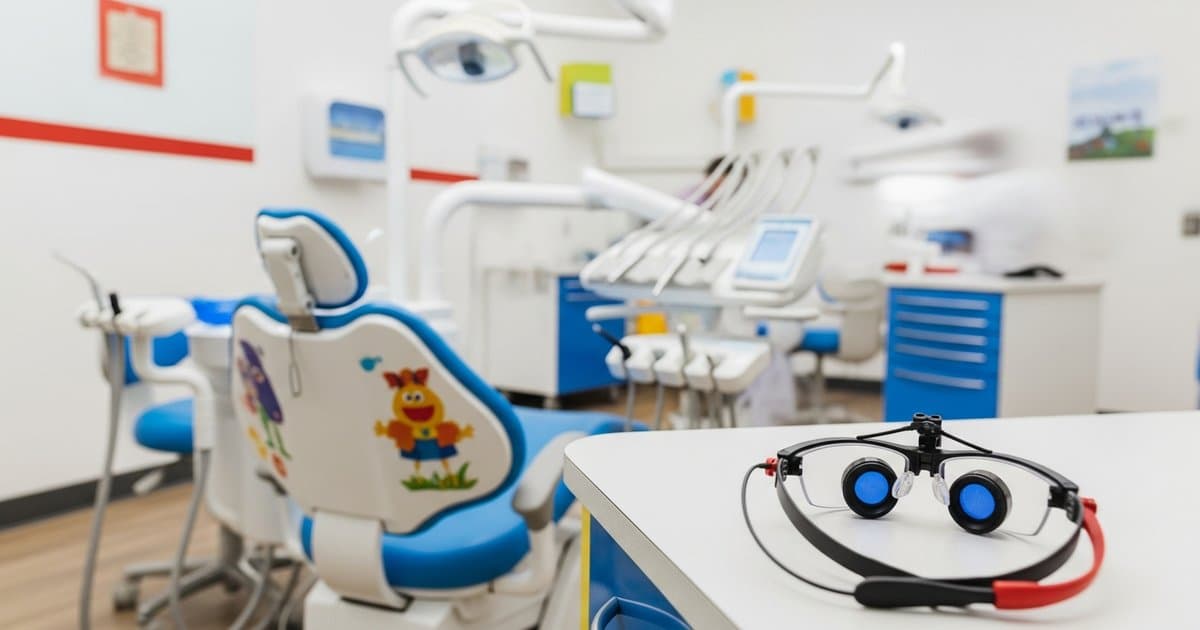
When treating young patients, every millimeter matters. The precision required in pediatric dentistry—from identifying early decay in primary teeth to performing delicate procedures in mouths that seem impossibly small—makes magnification not just helpful, but essential. Dental loupes have become an indispensable tool for pediatric dentists who want to deliver the highest quality care while maintaining their own physical well-being throughout long days of leaning over tiny patients.
Why Magnification is Critical in Pediatric Dentistry
The unique challenges of pediatric dentistry make magnification even more valuable than in general practice. Primary teeth are significantly smaller than permanent teeth, with thinner enamel layers that can make early caries detection challenging with the naked eye. What appears as a small shadow or discoloration may actually represent significant decay that requires immediate attention.
Beyond size considerations, pediatric patients often have limited mouth opening and cooperation windows. This means dentists must work quickly and accurately within confined spaces, often at awkward angles. Magnification allows for precise visualization without requiring excessive repositioning of either the patient or practitioner, reducing treatment time and improving patient comfort.
The anatomical differences in pediatric patients also create unique visualization challenges. The proximity of primary teeth to permanent tooth buds means that even minor procedures require exceptional precision to avoid damage to developing teeth. Magnification provides the detailed view necessary to identify these critical anatomical structures and work around them safely.
Research has consistently shown that magnification improves diagnostic accuracy, particularly for interproximal caries—a common concern in pediatric patients who may struggle with thorough oral hygiene. Studies indicate that dentists using magnification can detect up to 40% more early carious lesions compared to those relying on naked-eye examination alone.
Understanding Magnification Levels and Options
Selecting the appropriate magnification level requires balancing detail enhancement with field of view and working distance. For pediatric dentistry, most practitioners find optimal results with magnification levels between 2.5x and 4.0x, though some procedures may benefit from higher magnification.
2.5x Magnification provides an excellent starting point for general pediatric procedures, examinations, and preventive care. This level offers a comfortable working distance of approximately 13-15 inches and maintains a relatively wide field of view, making it ideal for practitioners new to loupes or those who perform a high volume of routine procedures. 3.0x to 3.5x Magnification represents the sweet spot for many pediatric dentists. This range provides enhanced detail for restorative work while maintaining sufficient field of view for efficient treatment. The working distance typically ranges from 11-13 inches, which works well with the ergonomic requirements of treating children. 4.0x and Higher Magnification becomes valuable for complex procedures, endodontic work on primary teeth, or cases requiring exceptional precision. However, the reduced field of view and shorter working distance can make these levels challenging for routine pediatric care, particularly when managing active or anxious young patients.When considering magnification options, practitioners can choose between flip-up and through-the-lens (TTL) designs. Flip-up loupes offer versatility, allowing easy transition between magnified and unmagnified views—particularly useful when interacting with patients and parents. TTL loupes provide superior optics and lighter weight distribution but require separate reading glasses for chart work and patient communication.
The quality of optics varies significantly between manufacturers and price points. Premium loupes feature multi-coated lenses that reduce chromatic aberration and provide crisp, clear images even at higher magnifications. While the initial investment is substantial, the improved visual clarity and reduced eye strain justify the cost for most practitioners.
Ergonomic Considerations for Long Treatment Sessions
Pediatric dentistry often involves extended periods of detailed work, making ergonomic considerations paramount when selecting loupes. Poor positioning can lead to neck strain, back pain, and career-limiting musculoskeletal disorders that affect up to 80% of dental professionals.
The declination angle—the downward angle of view through the loupes—significantly impacts neck positioning. For pediatric dentistry, declination angles between 20-30 degrees typically provide optimal ergonomics while maintaining clear visualization of the treatment area. This range allows practitioners to maintain a more upright head position, reducing cervical strain during lengthy procedures.
Working distance plays a crucial role in maintaining proper posture. The ideal working distance allows the practitioner to maintain an upright torso position while keeping arms relaxed at their sides. For pediatric dentistry, working distances between 11-15 inches accommodate the smaller patient anatomy while promoting healthy positioning.
Frame weight and weight distribution deserve careful consideration, especially for practitioners who wear loupes throughout long days. Titanium frames offer exceptional strength-to-weight ratios, while some manufacturers have developed innovative headband systems that distribute weight more evenly across the head and shoulders.
Many pediatric dentists find that adjustable loupes provide long-term value by accommodating changes in working preferences, different treatment scenarios, and multiple users within a practice. While initially more expensive, adjustable systems often prove more cost-effective than replacing fixed loupes as needs evolve.
The integration with other protective equipment requires attention, particularly in pediatric practices where infection control measures are paramount. Loupes should accommodate safety glasses, and consideration should be given to compatibility with face shields or other protective equipment that may be required for specific procedures.
Light Integration and LED Technology
Proper illumination becomes even more critical when working with magnification in the confined spaces of pediatric patients' mouths. Integrated LED lights eliminate shadows and provide consistent, daylight-balanced illumination that enhances the benefits of magnification.
Modern LED technology offers several advantages over traditional halogen light sources. LEDs produce less heat, preventing patient discomfort during extended procedures—particularly important for young patients who may be more sensitive to temperature changes. The cooler operating temperature also improves practitioner comfort when working in close proximity to the light source.
Battery life and charging systems deserve consideration in busy pediatric practices. High-quality LED systems now offer 8-12 hours of continuous operation on a single charge, easily covering a full day of patient care. Some systems feature quick-change battery packs that allow uninterrupted operation when longer procedures or emergency cases extend beyond normal battery life.
The color temperature of LED lights affects both visual acuity and patient comfort. Daylight-balanced LEDs (5500-6500K) provide optimal color rendition for identifying subtle changes in tooth structure and tissue health. This accurate color reproduction is particularly important in pediatric dentistry, where early detection of pathology can prevent more extensive treatment later.
Light intensity adjustment capabilities allow customization based on procedure requirements and patient sensitivity. While brighter illumination generally improves visibility, young patients may be more comfortable with slightly reduced intensity during examination and preventive procedures.
When selecting integrated lighting systems, compatibility with existing loupes should be verified. Many manufacturers offer retrofit options for existing loupes, though integrated systems typically provide better balance and wire management. The additional investment in integrated lighting typically pays dividends in improved visual acuity and reduced eye strain.
Maintenance and Care for Longevity
Proper maintenance ensures consistent optical performance and extends the lifespan of loupes—particularly important given the significant investment these instruments represent. Daily cleaning routines, proper storage, and regular professional maintenance can add years to loupe lifespan while maintaining optimal performance.
Daily cleaning should begin with removing debris using compressed air or a soft brush, followed by gentle cleaning with lens-specific solutions. Standard glass cleaners or alcohol-based solutions can damage lens coatings, making manufacturer-recommended cleaning products worth the additional cost. Microfiber cloths designed for optical equipment provide scratch-free cleaning that maintains lens clarity.
Storage considerations become particularly important in busy pediatric practices where loupes may be shared or stored between appointments. Protective cases shield lenses from scratches and impact damage, while also protecting delicate adjustment mechanisms. Some practitioners find that dedicated storage cabinets with individual compartments reduce handling damage and ensure loupes are always available when needed.
Regular professional maintenance, typically annually, can identify and correct minor alignment issues before they become major problems. Manufacturers often provide calibration services that restore optimal performance and can extend the useful life of loupes significantly. This professional maintenance also provides an opportunity to update components, such as upgrading to newer LED technology or replacing worn comfort features.
The investment in quality loupes—often ranging from $2,000 to $6,000 for premium systems with integrated lighting—requires protection through proper maintenance practices. However, when compared to the improved diagnostic accuracy, reduced eye strain, and enhanced precision they provide, quality loupes typically pay for themselves within the first year of use. For more information on other essential equipment investments, see our guide on Essential Supplies Every Pediatric Dental Office Needs.
Integration with other pediatric-specific instruments enhances the overall effectiveness of magnification. Properly sized instruments designed for pediatric anatomy work synergistically with magnification to improve treatment outcomes. Our comprehensive Child-Size Dental Instruments: A Buyer's Guide provides detailed information on selecting instruments that complement magnification systems.
How TGP Can Help
Investing in quality magnification systems represents a significant expense for pediatric dental practices, particularly when outfitting multiple providers or upgrading existing equipment. The Dental Group Partners (TGP) addresses these cost concerns through our group purchasing organization, which leverages the collective buying power of hundreds of dental practices to secure substantial savings on professional equipment and supplies.
Through TGP's established relationships with leading loupe manufacturers including Designs for Vision, Orascoptic, SurgiTel, and other premium brands, member practices typically save 20-30% on magnification systems. These savings apply not only to initial purchases but also to replacement parts, upgrades, and professional maintenance services that keep loupes performing optimally throughout their lifespan.
Our procurement specialists understand the unique requirements of pediatric dentistry and work directly with manufacturers to identify systems that best meet the specific needs of practices treating young patients. This expertise helps practices avoid costly mistakes and ensures that investments in magnification technology provide maximum value and performance.
Beyond initial cost savings, TGP members benefit from extended warranty programs, priority service support, and access to training resources that help maximize the investment in magnification technology. Many manufacturers offer exclusive programs through TGP that include hands-on fitting sessions, trial periods, and flexible upgrade paths that accommodate changing practice needs.
The savings achieved through TGP membership often exceed the cost of membership within the first major equipment purchase, making it an essential resource for practices committed to providing the highest quality patient care while maintaining financial efficiency. Our team stands ready to help identify the optimal magnification solution for your specific practice requirements while maximizing your investment through group purchasing power.
Key Takeaways
• Magnification is essential for pediatric dentistry due to smaller anatomical structures, thinner enamel, and confined working spaces that require exceptional precision
• Optimal magnification levels for pediatric dentistry typically range from 2.5x to 4.0x, balancing detail enhancement with field of view and working distance requirements
• Ergonomic considerations including declination angle (20-30 degrees) and proper working distance (11-15 inches) are crucial for preventing musculoskeletal disorders during extended treatment sessions
• Integrated LED lighting systems provide superior illumination with daylight-balanced color temperature, longer battery life, and reduced heat generation compared to traditional light sources
• Regular maintenance including daily cleaning with appropriate solutions, proper storage, and annual professional calibration ensures optimal performance and extends equipment lifespan
• Quality magnification systems typically cost $2,000-$6,000 but provide immediate returns through improved diagnostic accuracy, reduced treatment time, and enhanced precision in patient care
Frequently Asked Questions
What magnification level should I choose as a pediatric dentist new to using loupes?
Most pediatric dentists find 2.5x to 3.0x magnification ideal for starting out. This range provides significant enhancement in visualization while maintaining a comfortable working distance and field of view that accommodates the variety of procedures common in pediatric dentistry. Starting with moderate magnification allows you to adapt to working with loupes while still gaining substantial benefits in diagnostic accuracy and precision. Many practitioners find they can perform 80-90% of their procedures effectively at these magnification levels, making them excellent long-term choices rather than just stepping stones to higher magnification.
How do I determine the correct working distance and declination angle for pediatric dentistry?
Your optimal working distance should allow you to maintain an upright posture with relaxed shoulders while clearly visualizing the treatment area in pediatric patients. Generally, this falls between 11-15 inches for most practitioners. To determine your ideal measurements, sit in your normal treatment position with good posture and measure the distance from your eyes to where you typically focus when treating children. For declination angle, 20-30 degrees typically works well for pediatric dentistry, allowing downward viewing while maintaining neck alignment. Most reputable loupe manufacturers offer fitting appointments where these measurements are taken precisely to ensure optimal ergonomics and visual performance.
Are the cost savings from better diagnostics and efficiency enough to justify the investment in premium loupes?
The financial benefits of quality magnification systems extend well beyond the initial cost considerations. Improved diagnostic accuracy leads to earlier detection of problems, enabling less invasive and less expensive treatments for patients while building stronger relationships with families. Enhanced precision reduces the likelihood of complications and retreatment, improving both patient outcomes and practice efficiency. Many pediatric dentists report that magnification allows them to complete procedures more quickly and with greater confidence, increasing daily productivity. When combined with the career-extending benefits of improved ergonomics and reduced eye strain, premium loupes typically demonstrate clear return on investment within 12-18 months of purchase.